In honour of National Mentoring Month, we’re shining a light on Heather Wright, Vice President of People & Technology at the BC Maritime Employers Association.
With more than two decades of experience in a traditionally male-dominated industry, Heather shares how mentorship and visibility shaped her leadership journey, and why mentorship is essential to retraining and advancing women in sectors like maritime and transportation. From navigating boardrooms where she was often the only woman, to championing inclusive leadership and systems-level change across B.C.’s waterfront, Heather reflects on what it takes to build diversity where people don’t just enter an industry, they stay and thrive.
Read the full conversation on mentorship, leadership, and the future of inclusive workplaces, in partnership with Minerva BC.
National Mentoring Month is about recognizing the people who help shape our paths. Looking back, how did mentors or role models show up in your career, particularly as you navigated a male-dominated industry?
Heather Wright: As I look back on my career, mentors and role models didn’t always show up with formal titles or neatly defined programs, especially in a male-dominated industry. Often, they were people who took the time to see my potential before I fully saw it myself. Others were peers who modeled confidence, curiosity, and integrity, showing me that there is more than one way to lead effectively.
Those experiences shape how I show up for others. Mentorship to me is about opening doors, sharing what you’ve learned (including the missteps), and reminding people that they belong. That’s why initiatives like Minerva BC and National Mentoring Month are so important: they make visible the quiet, powerful ways mentorship changes careers and cultures.
At Minerva BC, we often say “you can’t be what you can’t see.” How does that idea show up in the way BCMEA thinks about mentorship, sponsorship, and leadership development, particularly for women and gender-diverse youth?
Heather Wright: I’m a deep believer in the power of visibility and in our responsibility to actively seek it out. Throughout my career, I’ve learned from a long line of women whose leadership I admired. Sometimes they were within my own organization, and other times they were people I encountered through professional networks, industry forums, and leadership communities. I didn’t aspire to become any one of them, but to grow into the qualities I saw and valued across many.
That’s where networking becomes so powerful. While it’s meaningful when role models exist within your workplace, there is tremendous value in placing yourself in rooms where you can meet other professionals, hear their stories, and expand your understanding of what leadership can look like. Inspiration and visibility are everywhere if you’re willing to look for them.
What advice would you give to women who are considering a career in the maritime industry?
Heather Wright: First, know that there’s a place for you here. The maritime industry offers a huge range of careers from engineering, technology, and operations to HR, finance, and leadership roles. Don’t let outdated perceptions limit you.
Second, build your network early. Seek out mentors, allies, and peers who will champion you and offer guidance. And don’t be afraid to raise your hand for opportunities, even if you feel you’re not 100% ready. Some of the most rewarding roles in my career came from taking on challenges that stretched me beyond my comfort zone.
Lastly, remember that your perspective has value. The maritime industry is evolving, and your ideas and contributions will help shape its future.
What is one leadership lesson that has stayed with you throughout your career?
Heather Wright: Stay curious. Early in my career, I thought leadership meant having answers and proving competence. Over time, I’ve learned that the most effective leaders lead with curiosity. They ask thoughtful questions, remain open to perspectives different from their own, and create space for others to contribute. Curiosity builds trust, deepens understanding, and often unlocks better outcomes than certainty ever could.
You’ve often been one of the few women in senior leadership in a male-dominated industry. What helps women not only enter, but stay and advance, in sectors like maritime?
Heather Wright: As mentioned, when I first started in the maritime industry, it wasn’t unusual to walk into a boardroom and be the only woman in the room. Over the years, I’ve seen a lot of progress: more women in leadership roles, more intentional recruitment of diverse talent, and a growing recognition that different perspectives strengthen decision-making and innovation.
That said, there’s still more work to do. Representation matters, which is why it’s critical to create inclusive workplace cultures where women feel welcome, supported, and empowered to lead. Mentorship and sponsorship are especially powerful in helping women advance and stay in the industry.
Retention and engagement start with culture. Policies like flexible work arrangements, parental leave support, and transparent promotion pathways are important, but equity also must be a lived experience where women see fair access to opportunities, feel their contributions are valued, and have visible role models.
The BCMEA plays a vital role in B.C.’s economy. How does inclusion connect to the success of your industry?
Heather Wright: The work we do, moving goods through B.C.’s ports, impacts every Canadian, whether they know it or not. It’s a complex, dynamic environment where collaboration and problem-solving are critical. When you bring together people with different perspectives, backgrounds, and life experiences, you get stronger ideas, better solutions, and more innovation. Mentorship helps to accelerate diversity by building trust, capability, and leadership readiness across the workforce.
In our sector, diversity and inclusion aren’t “nice to have” values, they’re essential for resilience and long-term competitiveness. The more voices we have at the table, the better equipped we are to adapt to change, meet challenges, and serve the needs of our members, partners, and the communities we operate in.
You’ve played a key role in the Waterfront DEI Council, which includes representatives from 10 of the largest terminal employers and operators in the province. Can you tell us more about the council’s work and why it matters to the BCMEA and B.C.’s waterfront?
Heather Wright: The Waterfront DEI Council is focused on integrating DEI into how the business operates, not treating it as a separate or parallel initiative. Our goal is to ensure equity, inclusion, and belonging are built into workforce planning, leadership development, and operational decision-making across B.C.’s waterfront.
By embedding DEI considerations and metrics directly into business initiatives and tracking progress over time, we can assess what’s working and adjust where needed. For the Waterfront, this approach ensures DEI is aligned with industry priorities, strengthens accountability, and supports a more resilient, future-ready waterfront workforce.
We are grateful to the BCMEA for partnering with Minerva BC on our Learning to Lead program; helping to support mentorship and career development with youth across B.C.
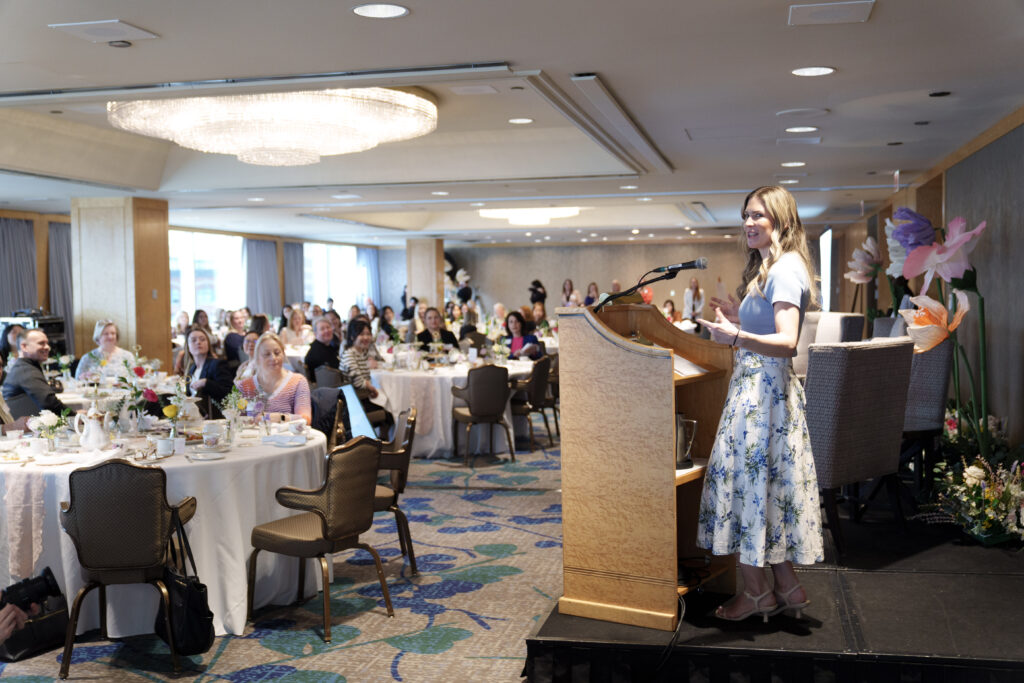
Heather moderating a panel on International Women’s day, 2025
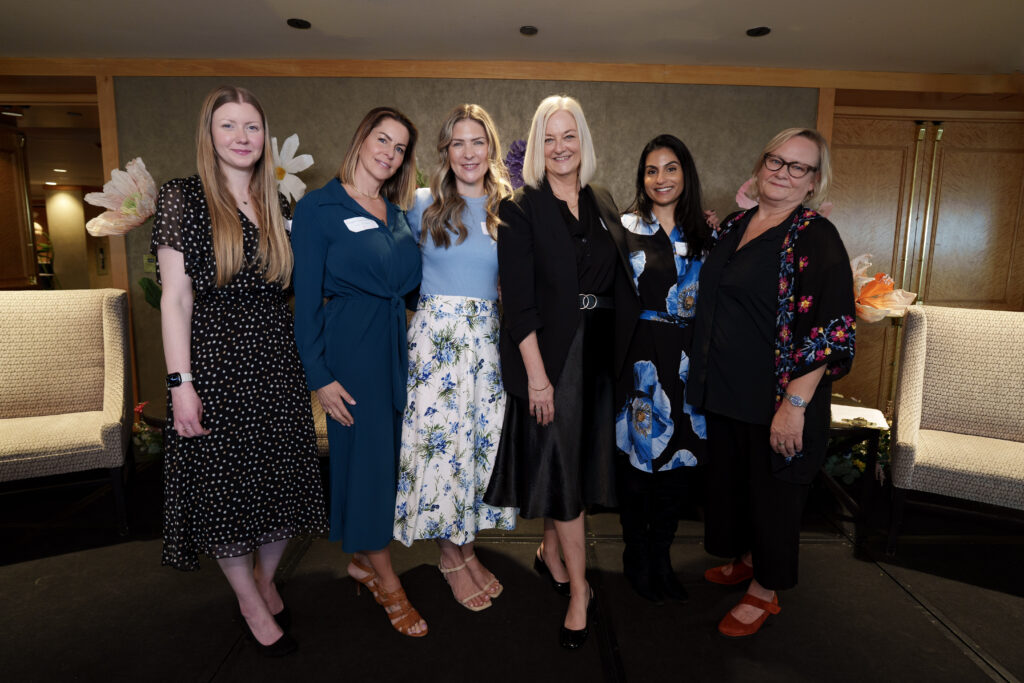
Heather with Waterfront DEI Council members, 2025